By Ayesha Iftikhar August 10, 2026 1 min read
NFC Tags 101: What They Are and What They Can Do
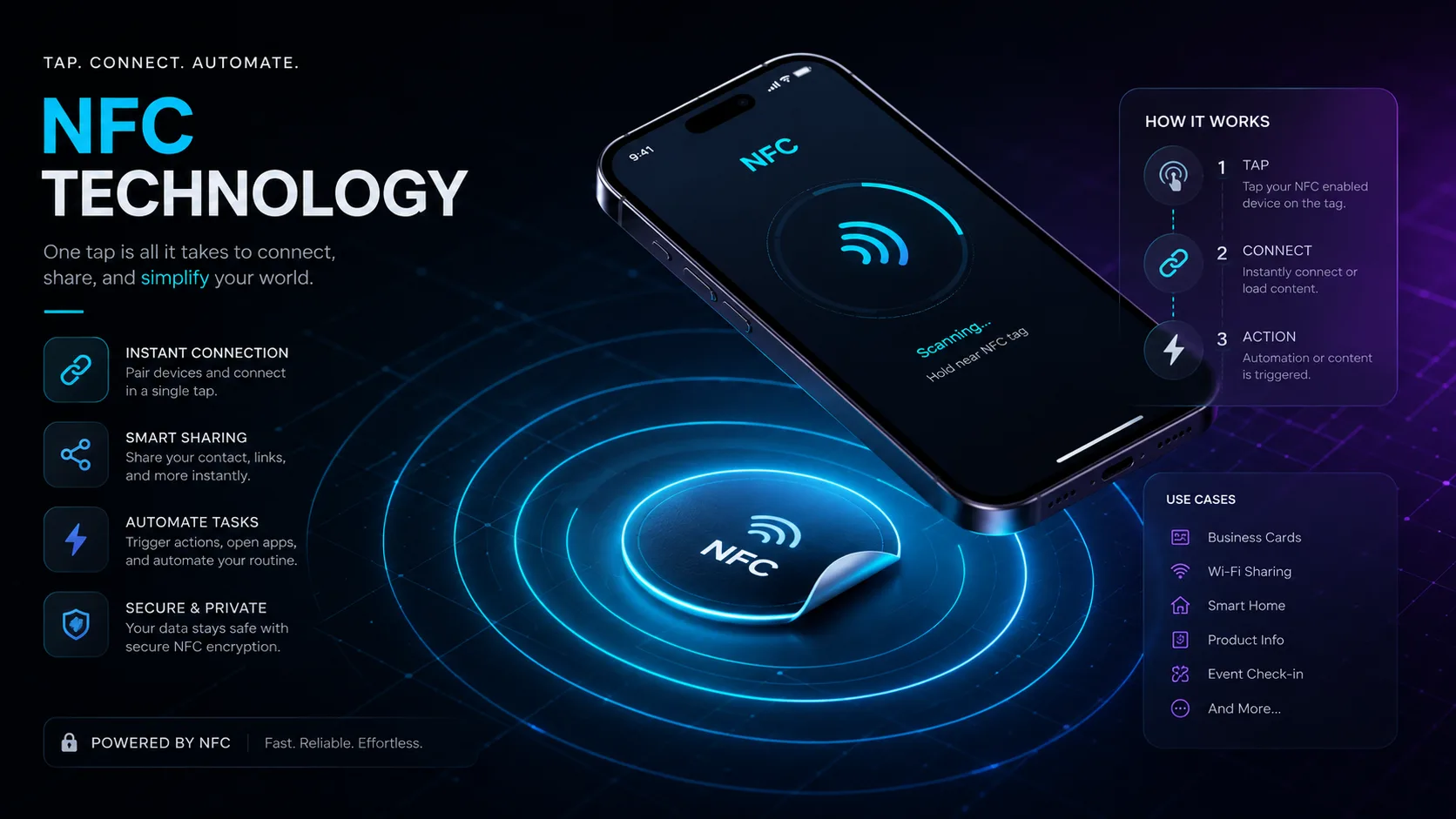
Near-field communication (NFC) is the short-range wireless technology that powers tap-to-pay, transit cards, and digital wallets. It works over just a few centimeters, which makes it perfect for one thing above all: intent. When someone taps an NFC tag, they meant to.
An NFC tag is a tiny passive chip attached to an antenna, usually inside a sticker, card, or key fob. It has no battery. Your phone's magnetic field powers the chip the moment it gets close, the tag transmits its stored data, and your phone acts on it — all in a fraction of a second.
What can a tag store?
Most consumer tags are formatted as NDEF (NFC Data Exchange Format), a standard that lets any phone read them. A tag can hold:
- A URL — open a website, menu, or Wi-Fi signup page
- Plain text or app deep links
- A contact card (vCard) that saves to the tapper's phone
- Wi-Fi credentials for instant network joins
- Bluetooth pairing payloads and custom app data
Why tags beat QR codes in the right places
QR codes need light, focus, and an app. NFC needs a tap. Tags work in the dark, survive rain and wear, and can't be photocopied out of context. They shine anywhere hands are full or lighting is bad: gyms, kitchens, workshops, event wristbands, and retail shelves.
The trade-off? Tags cost money (a few cents each) while QR codes print free. The winning combo most businesses land on: QR for mass print, NFC where durability and one-tap convenience matter.
Getting started costs almost nothing
Grab a pack of NTAG213 or NTAG215 stickers, install NFC Wizard on your iPhone or Android phone, and write your first tag in under a minute. Start simple: a tag on your desk that opens your timesheet, or one on the fridge that starts a grocery list.
Try it yourself
NFC Wizard is free for iPhone and Android.