By Ayesha Iftikhar August 14, 2026· Updated October 11, 2026 2 min read
NTAG213 vs NTAG215 vs NTAG216: Which NFC Tag Should You Buy?
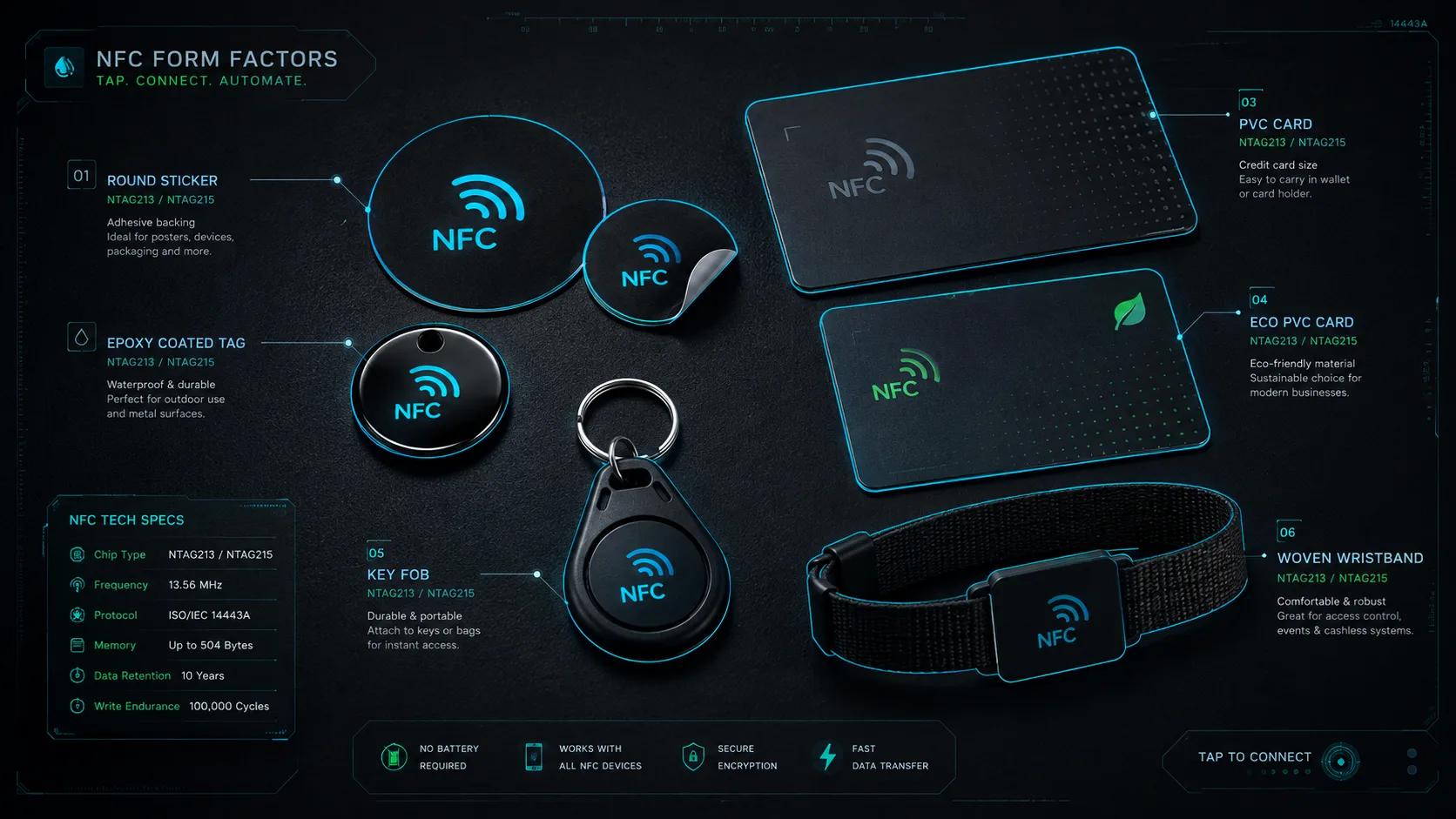
For a single link, NTAG213 (144 bytes of user memory) is enough and the cheapest. Choose NTAG215 (504 bytes) for contact cards (vCards) or longer data, and NTAG216 (888 bytes) when you need the most space on the chip. All three are rewritable, can be password-protected or locked, and work with NFC phones.
The rest of this guide explains what fits on each chip, which shape of tag to buy for where it will live, and the mistakes that waste a pack of tags.
NTAG213 vs NTAG215 vs NTAG216 at a glance
| NTAG213 | NTAG215 | NTAG216 | |
|---|---|---|---|
| User memory | 144 bytes | 504 bytes | 888 bytes |
| Longest URL (approx.) | ~130 characters | ~490 characters | ~850 characters |
| Good for | One link, short text, Wi-Fi | vCards, longer links | Large vCards, several records |
| Password protection | Yes | Yes | Yes |
| Permanent lock | Yes | Yes | Yes |
Memory figures are from NXP's NTAG213/215/216 datasheet. The URL lengths are approximate because NDEF formatting and the link's prefix (https://www. is stored as a single byte) change how much space is left.
Pick by what you're writing
- A website, menu, review page, or Google Maps link: NTAG213
- Wi-Fi login for guests: NTAG213 is usually enough; NTAG215 if the network name and password are long
- A business card with phone, email, website, and social links: NTAG215 or NTAG216
- Several records on one tag (for example a link plus text): NTAG216
- A Home Assistant tag or app trigger: NTAG213
Form factor follows the environment
The chip decides what fits; the shape decides where it survives. Stickers suit smooth indoor surfaces. PVC cards fit wallets and badges. Key fobs survive pockets and keychains. Wristbands are made for events, pools, and festivals. Each shape usually comes with the same NTAG chips inside, so choose by where the tag will live.
Two special cases
Metal: ordinary tags stop working on metal surfaces. Buy on-metal tags, which have a ferrite layer that lets them work on machinery, tools, and equipment.
MIFARE Classic: these tags aren't NTAG chips. iPhones can't read them, and only Android phones whose NFC chip supports MIFARE Classic can. For tags anyone can tap, stick to NTAG.
Check a tag before you write it
Scan any tag with NFC Wizard to see its chip type, capacity, and UID before you commit. If a pack is labelled NTAG215 but scans as something else, you'll know before writing a hundred of them.
Mistakes that waste tags
- Locking a tag permanently before testing it: a locked tag can never be rewritten
- Putting a regular tag on metal instead of an on-metal tag
- Squeezing a full vCard onto NTAG213 and getting a write error
- Buying MIFARE Classic tags for a project that iPhones need to read
Quick decision flow
- Just a URL indoors → NTAG213 sticker
- Contact sharing / business cards → NTAG215 card
- Metal surface → on-metal tag (any chip)
- Events with entry control → wristbands + Bulk Write
- Anything permanent → write, test, then lock
Try it yourself
NFC Wizard is free for iPhone and Android.